Amphibian LARS & DMS — Robotic Hull Cleaning and Recovery
One-Stop Robotic Hull Cleaning, Inspection and Debris Management
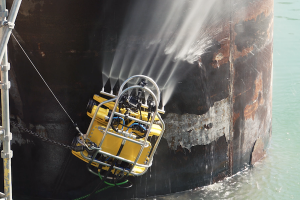
Amphibian LARS & DMS enables safer, more efficient hull maintenance by reducing reliance on diver-led operations for cleaning, inspection and debris recovery.
Amphibian LARS & DMS integrates launch and recovery capability with debris management to support the deployment of a robotic system from a workboat. Once deployed, the system performs hull cleaning, inspection and controlled debris collection in a single integrated workflow.
The solution is designed to support compliance with emerging environmental requirements relating to biofouling, invasive species transfer and marine pollution control, while improving operational efficiencyduring vessel maintenance.
By combining cleaning, inspection and debris handling in a modular system, the project helps reduce operational cost, improve turnaround time and minimise environmental impact across routine hull maintenance operations.
Amphibian UWILD — Underwater Inspection Without Dry-Docking
Robotic Underwater Inspection in Lieu of Dry-Docking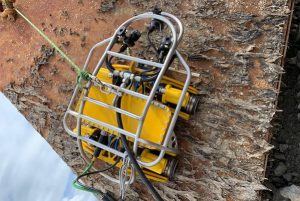
Amphibian UWILD enables safer more cost-effective underwater vessel inspection by reducing reliance on dry-docking, divers and conventional ROV operations.
Amphibian UWILD adapts the robotic platform for inspection of ship hulls and internal ballast tanks, allowing direct operation on submerged steel structures. Using magnetic adhesion, the system can move across curved hulls, weld caps and plate joints while carrying inspection payloads including cameras, lighting, cleaning tools and NDT equipment.
The system is designed to improve inspection accessibility and consistency in environments where traditional methods are time consuming, high-cost or operationally disruptive.
With integrated AI and machine learning capabilities, the platform supports faster interpretation of inspection data, defect trend analysis and improved planning for maintenance and repair activities.
The result is reduced downtime, improved inspection efficiency and better informed asset maintenance decisions.
OMM — AI Microgrids for Energy Autonomy
AI Powered Micro-Grids for Energy Resilience and Autonomy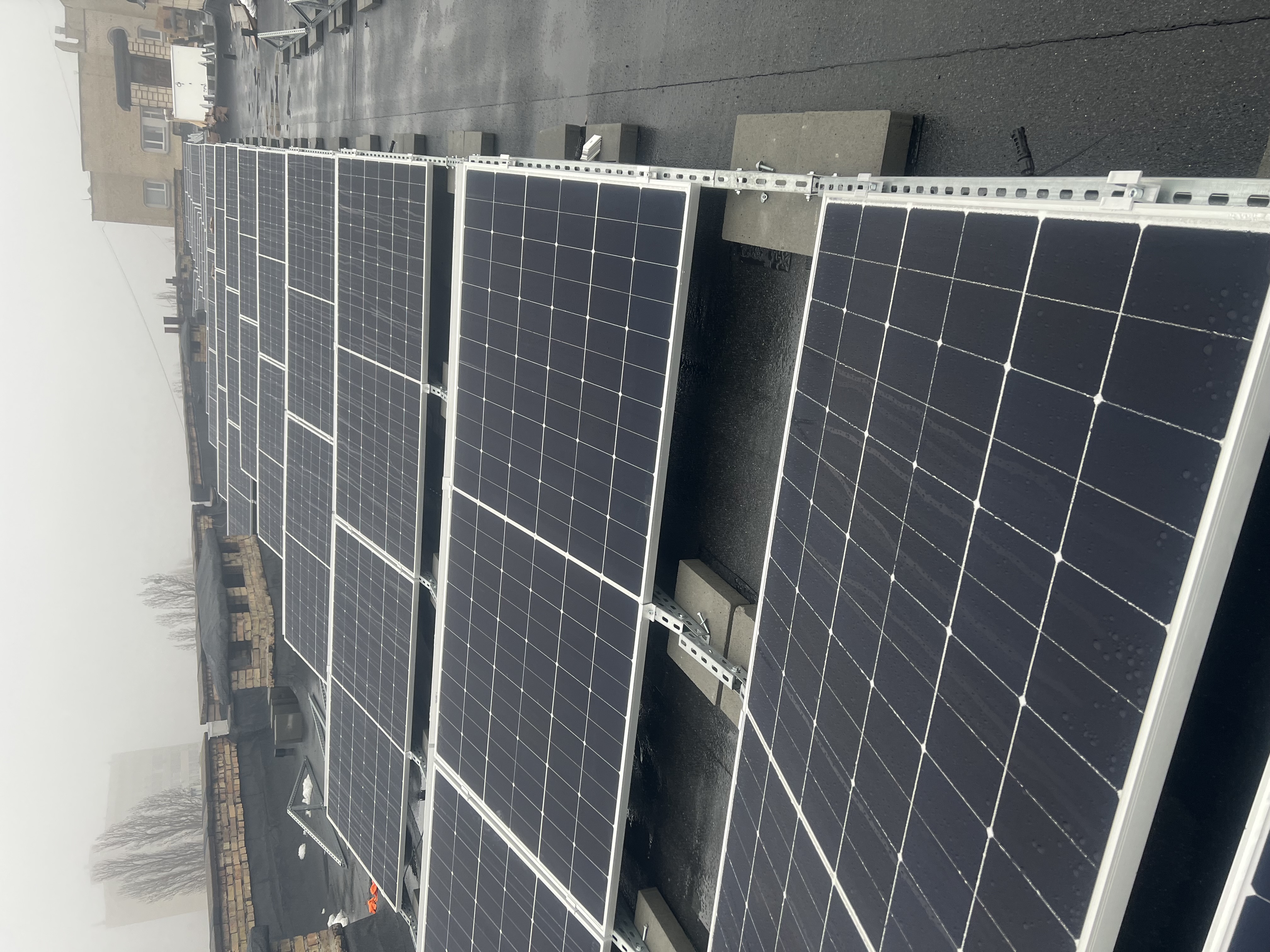
OMM improves energy resilience and operational continuity by enabling more reliable, locally managed power systems for environments affected by unstable or constrained energy infrastructure.
OMM develops smart micro-grid technology that supports secure, clean and cost effective electricity supply for buildings, facilities and critical infrastructure. The system is designed to improve energy autonomy where access to reliable power is limited or inconsistent.
The platform uses artificial intelligence to optimise energy generation, storage, scheduling and demand in real time. It supports both off-grid and grid-connected applications, reducing reliance on fragile networks while improving power stability and local energy performance.
With a modular architecture and AI-driven energy management, the system can be adapted across different building types, communities and operating environments.
The result is improved energy reliability, greater operational independence and enhanced resilience of critical energy systems.


DEMA2C — Smart Renewable Microgrids
Smart Renewable Micro-Grids for Communities with Limited Energy Access
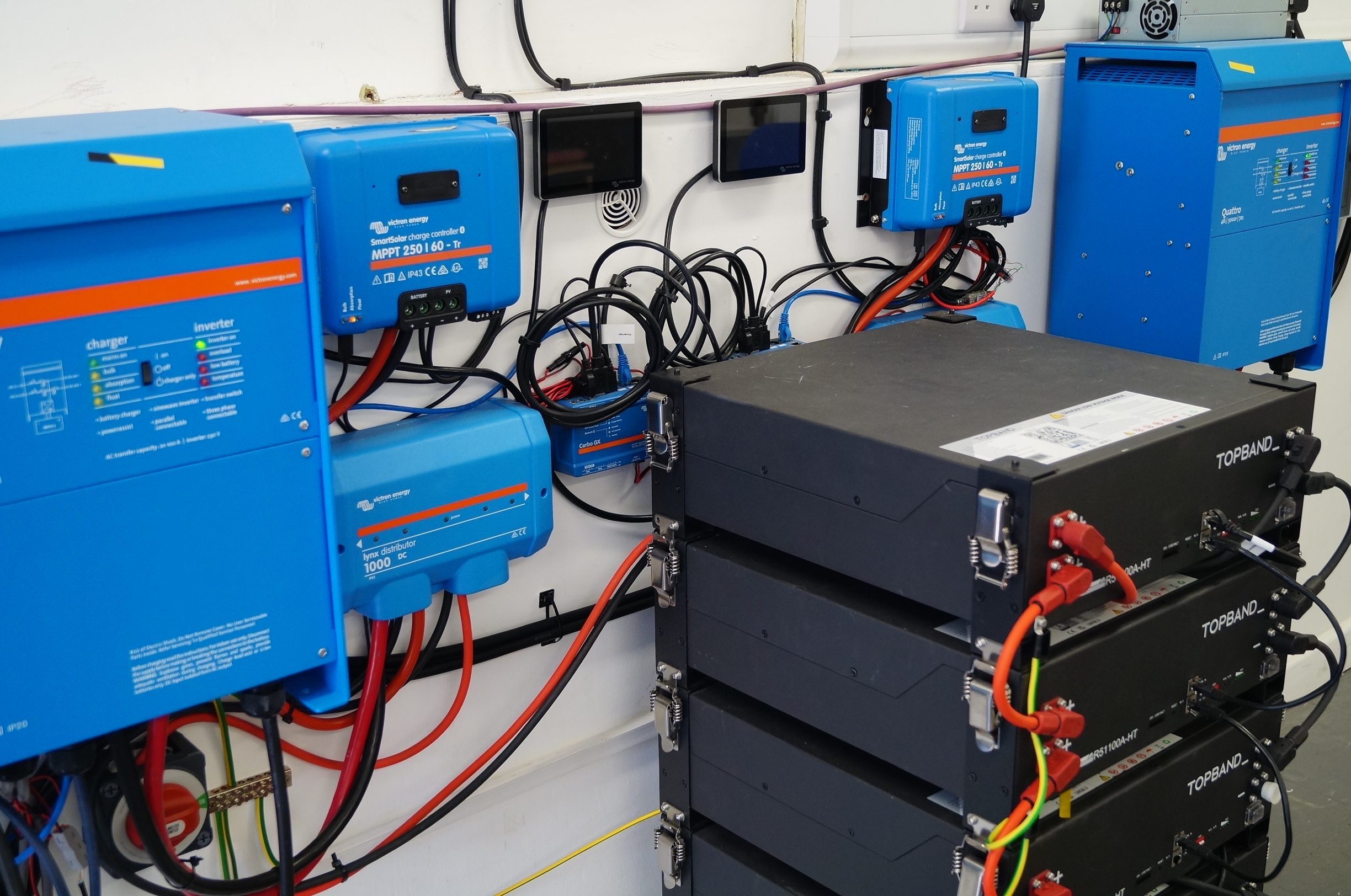
DEMA2C develops intelligent microgrid technology that addresses the challenge of mismatched energy generation and demand in solar-based systems. The platform improves how energy is stored, shared and distributed across households, small businesses, nano-grids and micro-grids, supporting more stable local energy access.
The system uses intelligent control, AI-driven storage management and distributed energy coordination to reduce energy waste and improve utilisation of renewable generation. It can operate as a virtual power plant, enabling dynamic balancing of supply and demand across connected users.
By combining smart grid technology with flexible deployment and payment models, the solution supports scalable energy access in remote and off-grid environments.
The result is improved energy reliability, better utilisation of renewable resources and more sustainable, cost-effective energy access for communities.



FLEXSHIP — Digital Twin Electrification for Vessels
Digital Twin enables Electrification for the Maritime Sector
FLEXSHIP supports the transition to cleaner and more efficient maritime operations by enabling safer and more effective vessel electrification.
FLEXSHIP develops flexible electrification solutions for waterborne assets, including modular battery systems, onboard integration methods and intelligent energy management. The system is designed to improve vessel efficiency, reduce emissions and support more reliable marine operations.
A key component of the project is a Green Digital Twin used to model and optimise vessel electrical system architectures before deployment. This enables better alignment between battery systems, power distribution, control strategies and operational requirements.
By combining modular energy storage, digital twin modelling and smart energy management, the solution helps reduce implementation risk and supports scalable electrification across hybrid and fully electric vessels.
The result is improved energy efficiency, safer system integration and faster adoption of low-emission maritime technologies.

HYPOBATT — Fast Charging for Electric Ships
Multi-Megawatt Fast Charging for Electric Vessels
HYPOBATT addresses a key barrier to maritime electrification by enabling faster, more reliable and more standardised charging for electric vessels in port environments.
HYPOBATT develops a modular multi-megawatt charging system designed for electric ships and port-side infrastructure. The system is built to support rapid vessel turnaround while ensuring safe and reliable integration with existing grid and energy networks.
The platform incorporates standardised interfaces, modular power scaling, grid compatibility, cybersecurity, monitoring and operational safety features to ensure consistent performance across different vessel types and port configurations.
By improving interoperability between vessels, charging systems and energy infrastructure, the solution reduces charging times, simplifies port integration and supports more efficient maritime operations.
The result is improved operational efficiency, reduced vessel downtime and accelerated adoption of electric maritime transport.
IRAD — Integrated Robotics, AI & Marine Data
Integrated Robotics, AI and Data for Marine Inspection 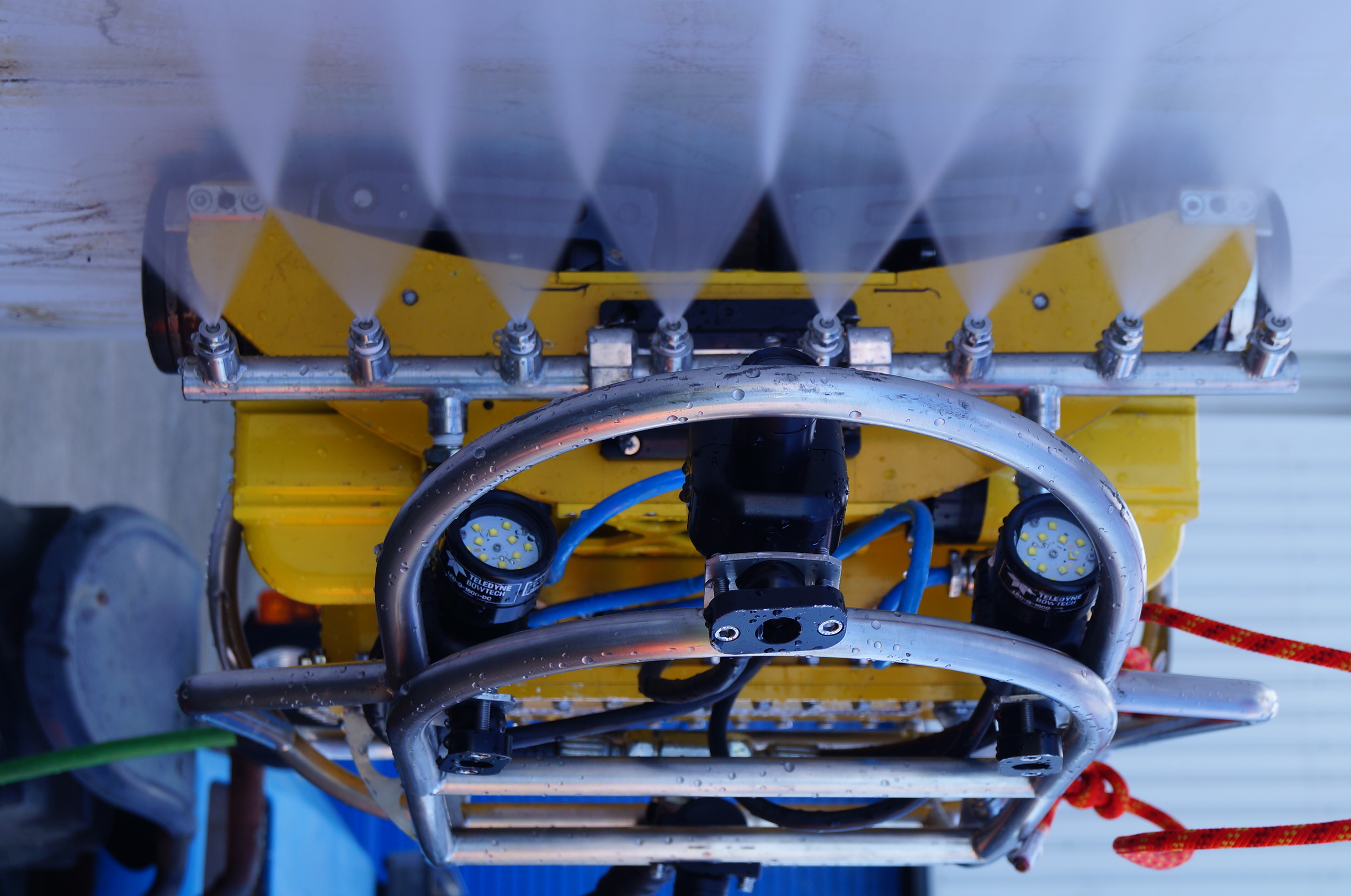
IRAD improves the safety and efficiency of marine inspection and maintenance by reducing reliance on divers and enabling more consistent underwater asset management.
IRAD builds on Innvotek’s Amphibian robotic platform to deliver integrated capabilities for inspection, cleaning, navigation and predictive maintenance of ship hulls and underwater structures.
The system combines robotic mobility, AI algorithms, data processing, autonomous navigation and launch-and-recovery systems to enable inspection and cleaning within a single operational workflow. This improves access to marine assets and supports more efficient maintenance operations.
By enabling regular hull cleaning and inspection, the solution contributes to improved fuel efficiency, reduced emissions, enhanced operational safety and more effective long-term asset management.
The result is more reliable marine operations, reduced downtime and improved performance of underwater infrastructure and vessels.
Nepa — In-Service Robotic Tank Inspection
Intrinsically Safe Robotics for Storage Tank Inspection
NEPA improves the safety and efficiency of above ground storage tank inspection by enabling in-service assessment and reducing the need for prolonged shutdowns.
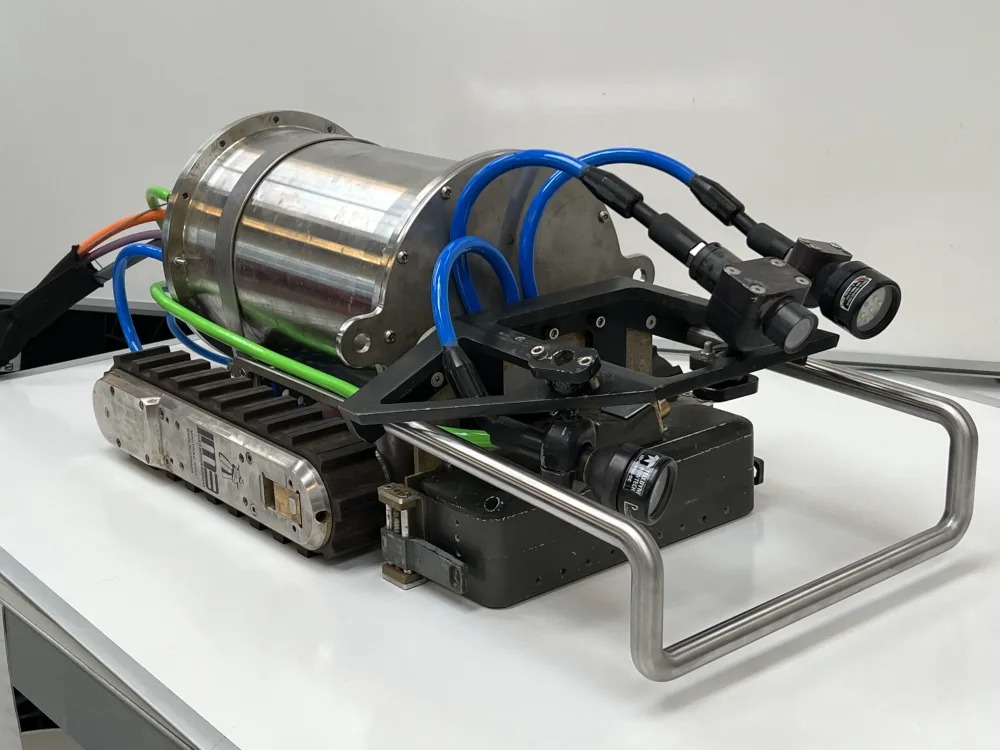
Nepa develops an intrinsically safe robotic system designed to operate inside storage tanks while they remain in service. The system enables inspection of corrosion and structural integrity issues that can lead to leaks, environmental damage and costly operational downtime.
The robot uses advanced non-destructive testing (NDT) methods to measure floor thinning and capture inspection data for analysis after retrieval. Its compact form factor and navigation capabilities allow operation in low visibility, confined tank environments.
By reducing reliance on manual entry and tank decommissioning, the solution improves inspection safety, shortens downtime and supports more proactive asset integrity management.
The result is safer operations, reduced inspection costs and improved long-term reliability of storage infrastructure.
COSCR-MULE — Autonomous Robotics for Construction Sites
Autonomous Construction Robotics for Safer Site Operations
This project improves construction site safety and productivity by reducing reliance on manual transport and high-risk labour tasks in dynamic working environments.
COSCR-MULE develops a fully autonomous mobile robotic platform designed to support fit-out operations on construction sites. The system is intended to improve material handling efficiency, reduce delays and support safer on-site logistics in environments affected by labour shortages and operational complexity.
The robot is capable of self-mapping and navigating dynamic construction environments, transporting materials such as ducting, pipework and cabling between storage areas and active work zones. It also supports tasks associated with working at height, helping reduce human exposure to elevated and high-risk activities.
By integrating robotics, navigation systems, site logistics and BIM-enabled workflows, the solution supports more coordinated, efficient and safer construction operations.
The result is improved site productivity, reduced safety risk and more efficient delivery of complex construction projects.



VORTEX — Flexible Vacuum-Suction Inspection Robotics
Vacuum Suction Robotic Platform for Flexible NDT Access
VORTEXimproves inspection access and safety by enabling non-destructive testing in environments where conventional inspection methods are limited, unsafe or inefficient.
VORTEX is a robotic platform that uses vacuum suction technology to operate across a wider range of surface types than traditional magnetic crawler systems. This allows inspection in environments where material compatibility or geometry prevents conventional robotic access.
The system is designed to carry NDT payloads in confined, hazardous and difficult-to-reach spaces, with development focused on improving payload capacity, manoeuvrability, suction performance and commercial readiness.
Its adaptable design supports inspection of pipes, tanks, aircraft structures, wind turbines, concrete surfaces, dams and other industrial assets requiring flexible robotic access.
The result is improved inspection coverage, reduced reliance on manual methods and safer access to complex industrial infrastructure.Vortex
FSWBot — Robotic Automation for Industrial Manufacturing
Robotic Automation for Industrial Welding and Manufacturing Resilience
FSWBot improves industrial productivity and operational safety by increasing the level of automation in welding and manufacturing processes where manual access and workforce availability are constrained.
FSWBot develops a robotic platform designed to support automated industrial welding applications in environments that require continuous operation, high reliability and reduced human exposure to hazardous conditions.
The system focuses on improving robotic mobility, payload capacity, structural design and operational robustness to support deployment in demanding industrial settings. It is being developed with commercial readiness in mind, enabling more flexible and scalable automation across manufacturing environments.
By reducing reliance on manual welding processes and increasing automation capability, the solution supports more consistent production, improved operational resilience and enhanced workplace safety.
The result is more reliable manufacturing processes, reduced downtime and improved safety in industrial production environments.

 FSWBot
ICELIP — Ice-Repellent Coatings for Harsh Conditions
Durable Ice Repellant Coatings for Aerospace and Energy Systems
ICELIP improves operational safety and performance by reducing the risks and costs associated with ice accumulation on critical aerospace and energy infrastructure.
ICELIP develops passive anti-icing coating technology designed for applications where ice formation negatively impacts safety, efficiency and reliability. The solution is intended for use across aircraft, wind turbines and power infrastructure operating in cold or exposed environments.
The project focuses on durable ice-repellent coatings using functionalised nano-additives that can be integrated into standard aerospace resin systems. This approach reduces reliance on mechanical de-icing, electrical heating and chemical treatments, which are often costly, energy intensive and environmentally constrained.
By improving surface ice resistance and coating durability, the technology supports safer operation, improved aerodynamic performance and reduced maintenance intervention across exposed infrastructure.
The result is lower operational cost, improved system efficiency and enhanced resilience in cold-environment operations.



AutoMon — AI Ultrasonic Monitoring for Critical Assets
AI Enabled Ultrasonic Monitoring for Critical Infrastructure
AutoMon improves the safety and reliability of critical infrastructure by enabling earlier detection of structural degradation and reducing reliance on manual interpretation of inspection data.
AutoMon develops AI based ultrasonic testing software and monitoring systems for steel components, piping, pressure vessels, offshore structures and nuclear assets. The system is designed to identify damage mechanisms such as cracking, stress corrosion and high-temperature hydrogen attack.
The platform uses artificial intelligence to process and interpret ultrasonic inspection data, enabling automated defect detection and reducing the risk of missed indications caused by human error or variability in interpretation. This helps address industry challenges including inspector shortages and increasing inspection demand.
By enabling more consistent analysis and supporting continuous monitoring of critical components, the solution improves inspection reliability, safety and asset integrity management.
The result is earlier fault detection, improved structural understanding and more dependable long-term infrastructure performance.

RADBLAD — Robotic X-Ray Inspection for Wind Turbine Blades
Robotic X-Ray Inspection for Offshore Wind Turbine Blades
RADBLAD improves the safety, speed and reliability of wind turbine blade inspection by enabling in-situ detection of internal defects without dismantling or transporting assets.
RADBLAD develops a robotic inspection system for offshore wind turbine blades using X-ray radiography. The solution addresses the challenge of identifying internal defects in large composite structures while they remain installed and operational.
The system combines climbing robotics, robotic manipulation, X-ray imaging, adaptive control and AI-based defect detection. It is designed to operate at height, conform to complex blade geometries and maintain imaging stability even under movement or vibration.
By enabling faster inspections and more accurate defect identification, the system reduces downtime, avoids costly blade removal and improves maintenance planning for offshore wind assets.
The result is safer inspection operations, improved asset reliability and reduced lifecycle cost for wind energy infrastructure.



Batt2TheFuture — Automated EV Battery Reuse Assessment
Automated Second Life Assessment for Electric Vehicle Batteries
Batt2TheFuture improves the efficiency and scalability of battery reuse by enabling faster and more reliable assessment of used electric vehicle battery cells for second-life applications.
Batt2TheFuture develops an automated system for grading and selecting used EV battery cells, addressing the challenge of accurately determining cell condition at scale for reuse, refurbishment or recycling.
The system combines ultrasonic testing, machine vision, AI and machine learning with barcode traceability and data management to assess State of Health and State of Charge significantly faster than conventional charge–discharge testing methods.
By identifying which cells are suitable for reuse, rebuilding or recycling, the platform supports more efficient battery circularity and reduces material waste across the battery lifecycle.
The result is extended battery lifespan, improved resource efficiency and reduced environmental impact from electric vehicle energy storage systems.
SmartBridge — Digital Twin Monitoring for Bridges
Digital Twin Monitoring for Safer Bridge Infrastructure
SmartBridge applies digital twin technology to real-time bridge condition monitoring. Bridges are exposed to ageing, corrosion, vibration, weather, heavy traffic, and structural fatigue, making continuous monitoring essential for safety and reliability.
The project creates dynamic multi-scale 3D models combined with sensor data, operating conditions, historical inspection records, and defect information. This allows the digital model to mirror the real bridge and continuously update its health, condition, and remaining life.
SmartBridge enables better decision-making, earlier risk detection, improved maintenance planning, and safer infrastructure without unnecessary overdesign.



EM-ReSt — Real-Time NDT for Additive Manufacturing
Smart NDT Monitoring for Additive Manufacturing
EM-ReSt develops an advanced monitoring system for additive manufacturing processes, where residual stresses and micro-cracks can lead to structural failure after production. Many conventional NDT methods are expensive, bulky, or unsuitable for detecting these issues during manufacturing.
The project combines Electromagnetic Acoustic Transducers, Eddy Current sensing, Big Data and machine learning to monitor additive manufacturing in real time. The system is designed as an add-on to existing AM processes, helping detect defects and optimise production before failures occur.
By enabling faster, lower cost, non-destructive monitoring, EM-ReSt supports better component quality, reduced waste and more reliable additive manufacturing for aerospace and automotive applications.